
Published: July 29, 2026
- European federations explore legal routes to block FIFA’s privatisation plan
- Trump-linked investment talks spark fury as World Cup rights are courted
- Boycott whispers grow; FA and UEFA pressed to take a stand
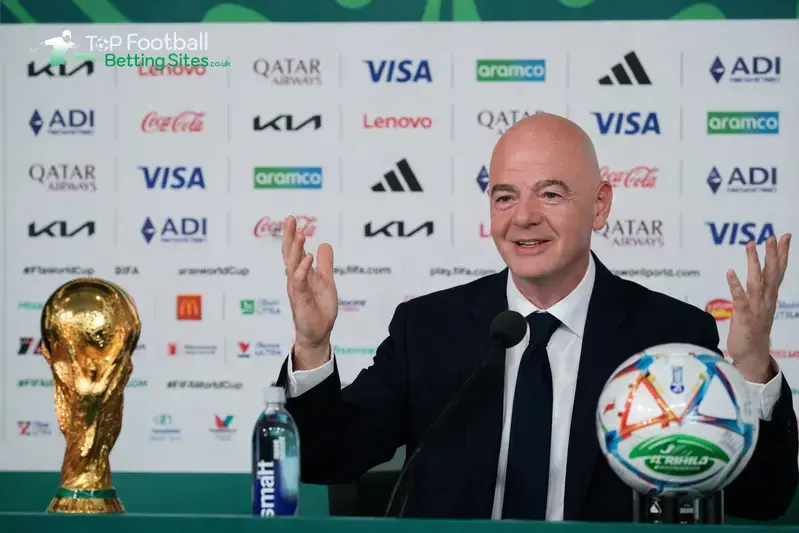
European football has reached a line-in-the-sand moment. Senior figures are examining legal options to stop Gianni Infantino’s push to create a private company to run FIFA competitions—and behind closed doors, a few executives are even floating the nuclear option: a World Cup boycott. While fans are scouring the best football betting sites for 2026 odds, the game’s powerbrokers are bracing for a governance bust‑up.
What’s Really at Stake
At the heart of the storm are reports that Josh Kushner—brother of Jared Kushner—is in talks to be a lead investor. That potential tie to the Trump orbit is setting teeth on edge across Europe. Critics, including former FIFA president Sepp Blatter, say the relationship has tipped into a financial sphere that damages the sport. The fear is simple: privatising parts of the World Cup—the game’s most cherished asset—entangles FIFA with shareholder value rather than the public good.
There are serious legal landmines. FIFA’s practices are currently tolerated under EU competition rules because they’re deemed to serve public interest; add a private equity dimension and that logic begins to fray. Questions also loom over FIFA’s not‑for‑profit status under Swiss law. UEFA has sounded unusually firm, and clubs will do the maths too: they received about $355m for releasing players for 2026—if the World Cup is part‑privatised, will the EFC settle for a comparatively small slice?
Could Europe Pull the Plug?
This could all be stopped at source. If England, Spain, Germany and France move in lockstep, the plan collapses. Political pressure is rising—Manchester mayor Andy Burnham has already weighed in—and the FA’s silence looks unsustainable, not least because several federations say they weren’t briefed until the media broke the story. Fans don’t want the World Cup sold off; national associations exist to defend that principle.
Even on pure business terms, it fails the smell test. Why sell equity in one of the planet’s fastest‑appreciating sporting “products” when you’re not strapped for cash? This isn’t Barcelona or Real Madrid juggling debts. Shift the model toward investors and you get a greater incentive to chase the most commercial angles, starving the grassroots and smaller federations over time.
Infantino has thrived in a bubble, but boos, banners and government scrutiny pierce it. He may not feel the full heat until 2030—yet if Europe finds its voice now, this project could be dead on arrival. The next move belongs to the federations.

Bio:
Football fanatic, you will often find me on the terraces at lower league matches on a Saturday afternoon. I leave the Premier League matches to the prawn sandwich brigade; grassroots football for me all the way.
Key contributions:
As the lead copywriter, it’s my job to turn my colleagues’ “messy notes” (sorry, guys!) into clear, engaging content. From bookmaker reviews to betting predictions, I make sure everything is polished, accurate, and easy to read
Personnel betting philosophy or quotes:
“Great content, like great football, is all about the fundamentals”
Latest Football News
Aston Villa Expose the Problems Behind Man Citys Strong Start
City’s 2-1 defeat at Aston Villa ended Maresca’s perfect Premier League start Midfield balance and defensiv...
Harry Kane Finally Gets His Ballon dOr Reward
Harry Kane wins the 2026 Ballon d’Or after scoring 73 goals for club and country Kylian Mbappe finishes sec...
Ballon dOr Winners Talking Points and Trends
Lamine Yamal named Men’s Young Talent of the Year Luis de la Fuente wins Men’s Coach after leading Spain to...
Carrick Teeters As United Crisis Deepens
Carrick under severe pressure after 3-0 Bournemouth defeat United 16th and winless in eight Fans back Carri...
